Adding a room to your home is one of the most effective ways to improve how you live in your space – and, in many cases, increase its long-term value. Whether your household has outgrown its current layout or you’re planning ahead for resale, a well-designed room addition can deliver both lifestyle benefits and financial return.
But before you take the next step, it’s important to understand:
- Why people add rooms
- What’s involved in the process
- And how to approach it in a way that avoids unnecessary cost, disruption, or regret.
Our Melbourne building designers focus on extending and renovating homes. So from that experience, we’ve put together the most popular new room addition ideas to help you get started.
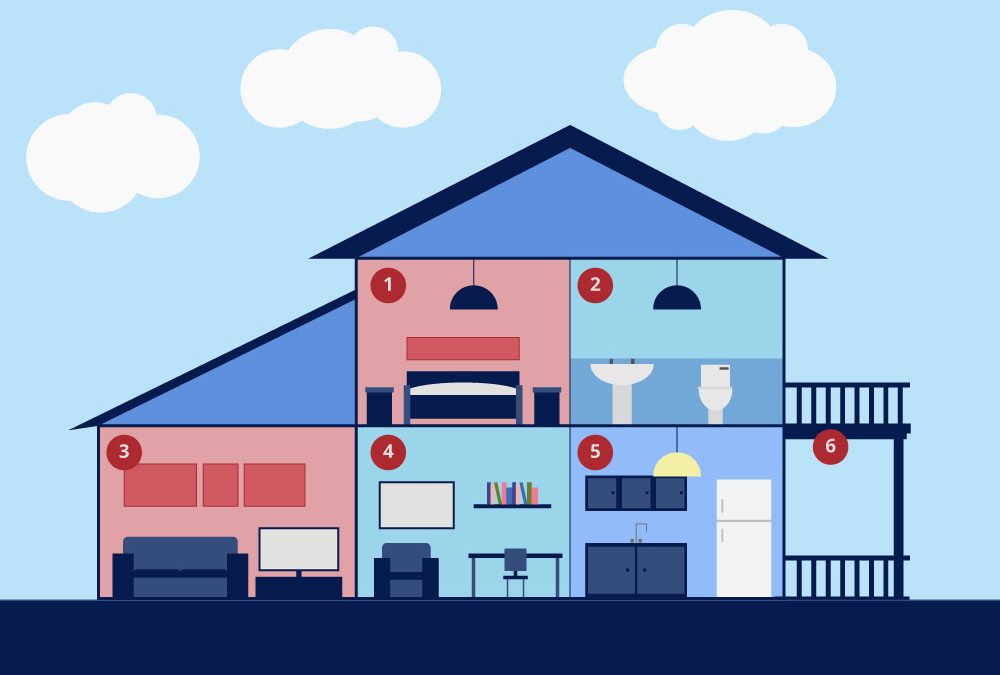
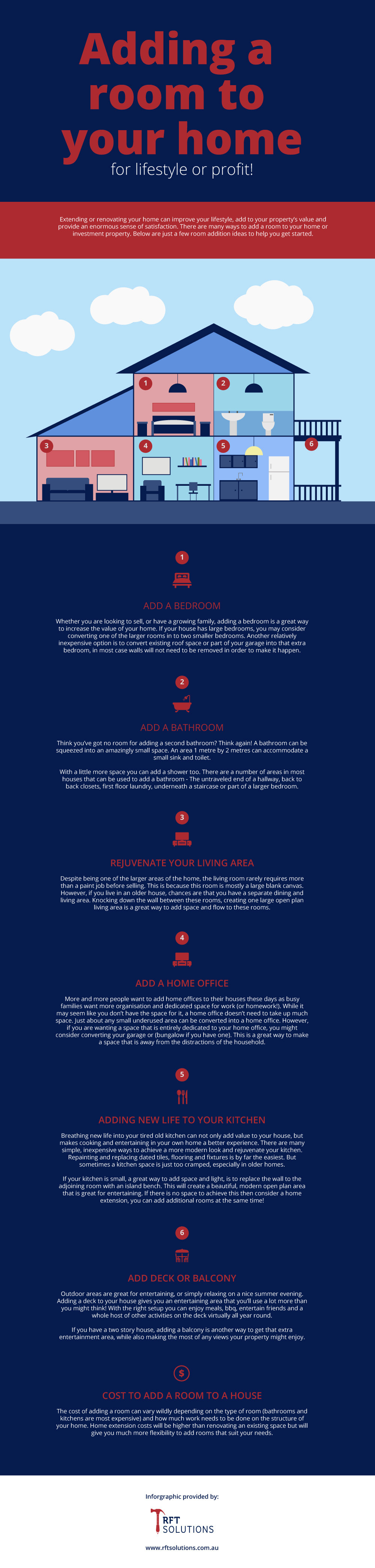
We hope our infographic, “Adding a room to your home for lifestyle or profit!” inspires you to take the next step!
Please copy the code below to share this infographic on your website, including attribution.
<a href="https://rftsolutions.com.au/adding-a-room-to-house/"><img style="width:100%;" src="https://rftsolutions.com.au/wp-content/uploads/2018/08/add-a-room-infographic.jpg"></a><br>Infographic provided by <a href="https://rftsolutions.com.au/">RFT Solutions</a>
“Adding a room to your home for lifestyle or profit!” Infographic Transcription
Extending or renovating your home can improve your lifestyle, add to your property’s value and provide an enormous sense of satisfaction. There are many ways to add a room to your home or investment property. Below are just a few room addition ideas to help you get started.
Add a bedroom
Whether you are looking to sell, or have a growing family, adding a bedroom is a great way to increase the value of your home. If your house has large bedrooms, you may consider converting one of the larger rooms into two smaller bedrooms. Another relatively inexpensive option is to convert existing roof space or part of your garage into that extra bedroom, in most case walls will not need to be removed in order to make it happen.
Add a bathroom
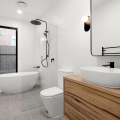
Think you’ve got no room for adding a second bathroom? Think again! A bathroom can be squeezed into an amazingly small space. An area 1 metre by 2 metres can accommodate a small sink and toilet.
With a little more space, you can add a shower too. There are a number of areas in most houses that can be used to add a bathroom – The untraveled end of a hallway, back to back closets, first floor laundry, underneath a staircase or part of a larger bedroom.
Rejuvenate your living area
Despite being one of the larger areas of the home, the living room rarely requires more than a paint job before selling. This is because this room is mostly a large blank canvas. However, if you live in an older house, chances are that you have a separate dining and living area. Knocking down the wall between these rooms, creating one large open plan living area is a great way to add space and flow to these rooms.
Add a home office
More and more people want to add home offices to their houses these days as busy families want more organisation and dedicated space for work (or homework!). While it may seem like you don’t have the space for it, a home office doesn’t need to take up much space. Just about any small, underused area can be converted into a home office. However, if you are wanting a space that is entirely dedicated to your home office, you might consider converting your garage or (bungalow if you have one). This is a great way to make a space that is away from the distractions of the household.
Adding new life to your kitchen
Breathing new life into your tired old kitchen can not only add value to your house, but makes cooking and entertaining in your own home a better experience. There are many simple, inexpensive ways to achieve a more modern look and rejuvenate your kitchen. Repainting and replacing dated tiles, flooring and fixtures is by far the easiest. But sometimes a kitchen space is just too cramped, especially in older homes.
If your kitchen is small, a great way to add space and light, is to replace the wall to the adjoining room with an island bench. This will create a beautiful, modern open plan area that is great for entertaining. If there is no space to achieve this then consider a home extension, you can add additional rooms at the same time!
Add deck or balcony
Outdoor areas are great for entertaining, or simply relaxing on a nice summer evening. Adding a deck to your house gives you an entertaining area that you’ll use a lot more than you might think! With the right setup you can enjoy meals, bbq, entertain friends and a whole host of other activities on the deck virtually all year round.
If you have a two story house, adding a balcony is another way to get that extra entertainment area, while also making the most of any views your property might enjoy.
Cost to add a room to a house
The cost of adding a room can vary wildly depending on the type of room (bathrooms and kitchens are most expensive) and how much work needs to be done on the structure of your home. Home extension costs will be higher than renovating an existing space but will give you much more flexibility to add rooms that suit your needs.
Reasons for adding a room to your home
Homeowners choose to add rooms for a wide range of reasons, often driven by changing needs rather than a desire to move.
1. Accommodating a growing family
Additional bedrooms, shared study areas, or extra living spaces can greatly improve comfort and functionality while allowing you to stay in a neighbourhood you already love.
2. Adapting to lifestyle changes
Working from home, caring for older family members, or needing space for guests can quickly make an existing layout feel restrictive. A well-planned room addition allows your home to evolve with your needs.
3. Increasing resale appeal and long-term value
From an investment perspective, homes with flexible layouts, extra bedrooms, or dedicated workspaces often attract stronger buyer interest – particularly in established Melbourne suburbs.
Types of rooms you can add
There is no single ‘right’ room to add – it’s always up to you! The best option for you depends on how you live now and how you may use the space in the future.
Guest room
A guest room provides flexibility for visiting family and friends and can double as:
- A secondary bedroom
- A hobby room
- Or a future teenager’s space.
When designed well, it adds functional value without requiring constant daily use.
Bedroom
Adding a bedroom is one of the most popular room additions, particularly for families. Extra bedrooms can:
- Relieve pressure on shared spaces
- Allow children to grow into their own rooms
- Or create a main bedroom suite when paired with an ensuite.
Home office
Home offices have shifted from ‘nice to have’ to essential in many households. A dedicated workspace can:
- Improve productivity
- Reduce household disruption
- Support long-term working-from-home arrangements.
Key design considerations for a home office
A home office requires more than simply fitting in a desk.
Critical aspects, including power points, data outlets, and charging locations, need to be planned carefully to support computers, screens, printers, and other equipment – without relying on extension cords.
Natural light is important, but it must be controlled. Poor window placement can cause screen glare, making the space uncomfortable to use. Thoughtful orientation and shading make a significant difference.
Sound separation is another critical factor. Locating a home office away from living areas or providing acoustic separation helps maintain focus and privacy during calls and meetings.
Built-in storage and filing can also transform a home office from a temporary setup into a functional, long-term workspace that remains organised and clutter-free.
Timeline, budget & disruption
It’s important to realise that adding a room is a substantial project for your home and family, and understanding the broader timeline helps set realistic expectations as you press ‘go’.
The process typically begins with design development and documentation, followed by planning and building approvals where required. Construction is only one part of the overall journey, and in many cases, approvals and preparation take longer than the build itself.
Budgets vary depending on the type of room, structural requirements, and how the new space integrates with the existing home. Extensions tend to cost more than internal renovations but offer greater flexibility in layout and future use.
Disruption is also an important consideration. While experienced professionals work to minimise impact, adding a room can affect daily routines, access, and noise levels during construction. Clear planning upfront helps reduce surprises later.
Getting approved
Approval requirements depend on:
- The scope of work
- The location of the room addition
- Local planning controls.
Some projects require only a building permit, while others also need planning approval. Setbacks, overlooking, heritage overlays, and neighbourhood character provisions can all influence what is permitted, and navigating these requirements early on in the process is critical.
Delays or redesigns caused by overlooked approvals can add time and cost to a project, which is why professional guidance is so, so valuable.
Choosing the right professionals
Successfully adding a room requires more than a good idea – it requires careful coordination across design, all the right documentation and approvals, and construction that gives you confidence from the very beginning.
RFT Solutions supports homeowners throughout this entire process by providing:
- Concept and detailed room extension design
- Drafting and comprehensive documentation
- Coordination of engineers and other consultants
- Management of building and, where required, planning permit applications
- Guidance with builder selection and tendering.
By managing these stages as a complete and cohesive process, homeowners just like you gain clarity, cost control, and confidence – all before construction ever begins.
All about adding a room to your home – FAQs
Q: Do I need permits to add a room to my house?
Most room additions require a building permit, and some also require planning approval depending on council controls and project scope.
Q: How long does it take to add a room?
Timeframes vary, but the overall process often spans several months when design, approvals, and construction are included.
Q: Is it cheaper to renovate or build an extension?
Renovating existing space is often less expensive, but extensions provide more flexibility and may better suit long-term needs.
Q: Will adding a room increase my home’s value?
In many cases, yes. Additional functional space can improve resale appeal, particularly when well designed and integrated.
Q: Who should manage the design and approvals?
Engaging experienced building designers helps ensure approvals, documentation, and coordination are handled correctly from the start.
Related posts:
 Adding A Basement In Melbourne: Construction & Design Guide
 A Comprehensive Guide to Finding a Builder for Your Home or Extension in Melbourne
 Second Storey Extensions Melbourne: Adding A Second Storey To A House
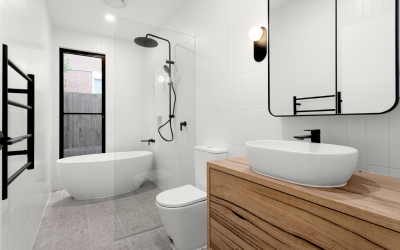 Adding A Bathroom To Your House: Simplify Your Journey
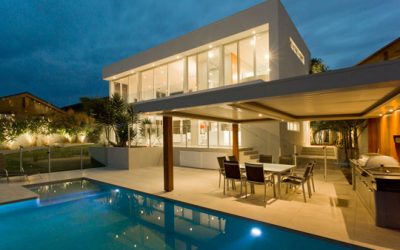 Outdoor Room Extensions In Melbourne – Extend Your Living Space!
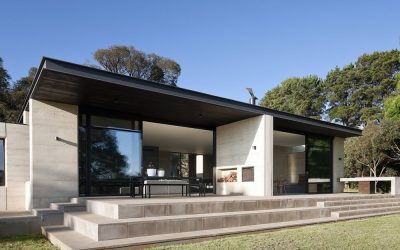 5 House Roof Designs For Your Dream Home